Biodiversity boosts mental wellbeing
01 April 2026
Last reviewed: 01 April 2026
Consider three outdoor scenarios:
- A sunny public park where people are picnicking and playing frisbee.
- A fragrant wildflower meadow where the occasional buzzing of a passing bee is the only sound.
- The grassy bank of a babbling brook where birdsong fills the air.
Where would you feel more relaxed? If it's the public park, you're in the minority, according to recent research from King's College, London.
It found that biodiverse environments such as meadows and woodlands provide stronger mental wellbeing benefits than generic green spaces due to the greater sensory stimulation provided by natural sounds, colours, and smells.
"Biodiversity is critical not only for the health of our natural environments but also for the mental wellbeing of the people who live in these environments," said Andrea Mechelli, Professor of Early Intervention in Mental Health at the King's College Institute of Psychiatry, Psychology & Neuroscience (IoPPN).
Biodiversity is key to the mental health benefits of nature, new study finds - King's College London
About the study
IoPPN researchers used the smartphone app Urban Mind to collect real-time reports on mental wellbeing and natural diversity from nearly 2,000 participants over a five-year period.
They found that planetary health and human health go hand in hand, with environments displaying a larger number of natural features, such as trees, birds, plants and waterways, being associated with greater mental wellbeing.
The results of the study, which was funded by the National Institute for Health and Care Research and the charitable foundation Wellcome, also suggest that the benefits afforded by spending time in such places can last for up to eight hours afterwards.
"To our knowledge, this is the first study examining the mental health impact of everyday encounters with different levels of natural diversity in real-life contexts," said Ryan Hammoud, Research Assistant at the IoPPN.
"Our results highlight that by protecting and promoting natural diversity we can maximise the benefits of nature for mental wellbeing.
"In practice, this means moving away from heavily curated monocultural pockets and parks of mown grass, which are typically associated with low biodiversity, towards spaces which mirror the biodiversity of natural ecosystems."
The benefits of incorporating more biodiversity into your life
While this may be the first study to prove the link between biodiversity and mental wellbeing, spending time in the great outdoors is already widely accepted as being good for your mental health.
That's why it's one of the activities recommended by mental health charity Mind. "Doing things like growing food or flowers, exercising outdoors or being around animals can have lots of positive effects," the charity said.
Potential benefits of convening with nature in this way include:
- Improving your mood
- Reducing stress
- Helping with mental health problems such as anxiety and depression
- Improving your physical health
- Boosting your self confidence
- Helping you meet new people
- Connecting you to your local community
Why is biodiversity so good for our mental health?
Being in nature has been shown to both promote lower blood pressure and significantly decrease levels of cortisol, the primary hormone we create when we are stressed.
But why is this the case? The way we live today is one reason.
Figures suggest that most adults spend at least 90% of their day indoors, much of it looking at phone and computer screens.
It's a far cry from how we spent our time a few hundred years ago, when the majority of people worked outside - and had a much clearer idea of their place in the world as a result.
And while just getting out in the fresh air is undeniably a mood enhancer, the effects of spending time outside are intensified by the curiosity and wonder triggered by exposure to different plants and animals.
Or in other words, the more diverse and colourful our environment, the greater the feeling of connection and inner peace.
Did you know?
Even watching nature documentaries has been shown to be good for our mental health.
Five ways to boost metal wellbeing by getting closer to nature
1. Growing or picking food
From planting herbs in a window box to joining a community gardening project or picking fruit on a local farm, getting your hands dirty is a surefire way to feel closer to nature.
2. Bringing nature to you
Filling your home with plants and flowers is an easy way to use nature to lift your mood. If you're unable to get outside much, you can also set up a comfortable chair from which you can look at the sky or some trees.
3. Heading outdoors
Simply going for a walk by a stream or along a woodland trail allows you to immerse yourself in the smells and sounds of nature. And you can boost your mental wellbeing by doing everything from eating to exercising outdoors when possible. Stargazing is also very relaxing when the night sky is clear.
4. Connecting with animals
Whether wild or domestic, animals can be a very calming influence. From watching squirrels playing in your local park to offering to walk a friend's dog or volunteering on a local community or city farm, taking more notice of the animals around you can help you feel closer to nature – and therefore happier in yourself.
5. Doing your bit for the environment
From hedgehog houses to bird feeders, there are lots of ways to create a safe place for wildlife in your local area. If you enjoy walking, meanwhile, why not pick up litter as you go. The Keep Britain Tidy, Marine Conservation Society and Surfers Against Sewage - UK charity campaigning for the ocean websites have details of clean ups being organised in different areas of the country.
Consider ecotherapy
Ecotherapy is a structured programme that involves doing activities outside in nature alongside a trained professional. Activities included in such programmes can include:
- Conservation projects, gardening, or farming
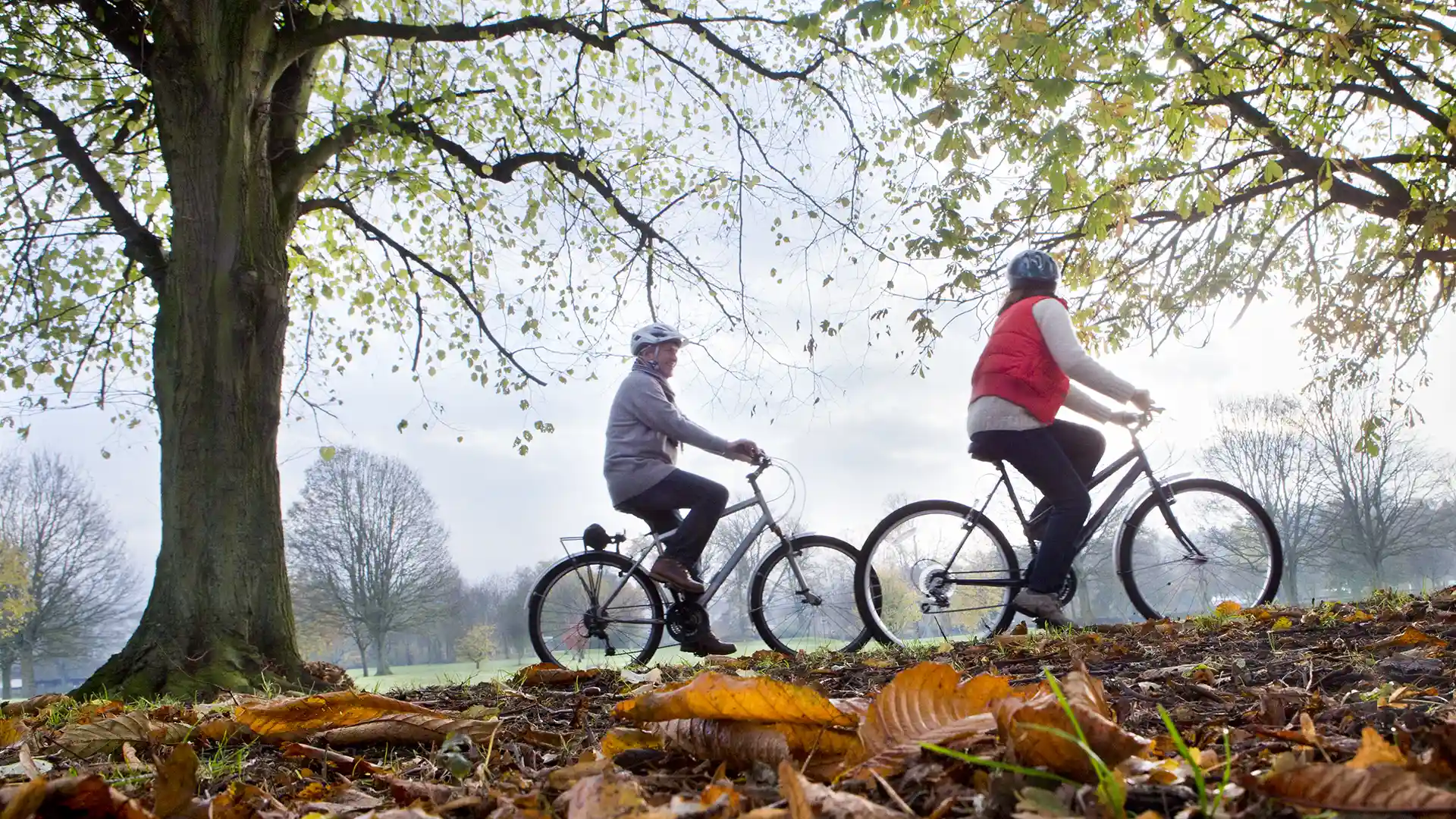
- Walking or cycling through woodland areas
- Open water swimming
- More adventurous physical activities, such as rafting or rock climbing
- Animal-assisted therapy that involves building relationships with animals, such as horses or dogs
You can find ecotherapy programmes in your local area by asking your GP – or another health or social care professional - to refer you to local providers. Your local Mind branch may also be able to inform you about any local ecotherapy programmes you could join.
Spending more time in biodiverse natural spaces can boost your mood, reduce stress and deepen your sense of connection - proof that nature truly nourishes our wellbeing.
About the author
Nic Paton is one of the country's foremost journalists on workplace health, safety and wellbeing, and is editor of Occupational Health & Wellbeing magazine. He also regularly writes on the health and employee benefits and health insurance markets.